


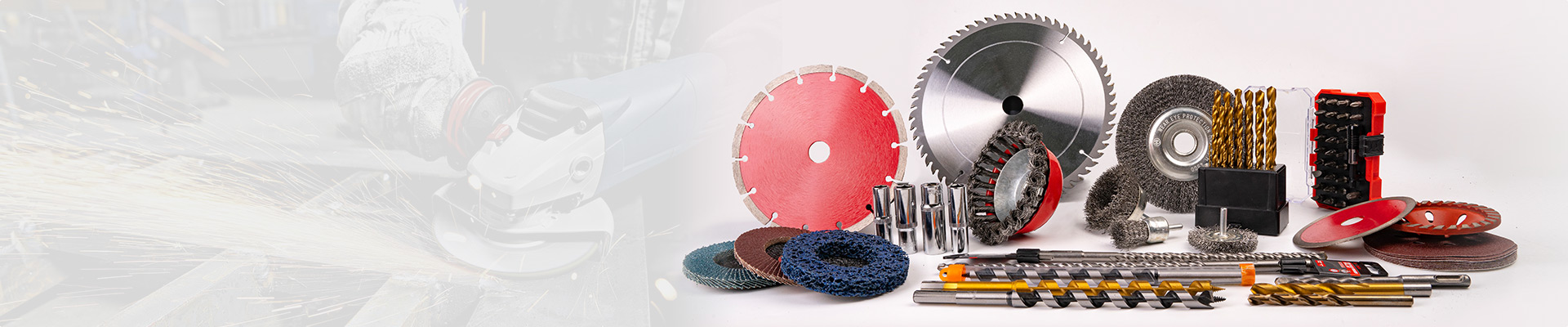
When I compare diamond blades, I start with the material, required cutting speed, edge finish, cooling method, and machine compatibility. Segmented vs Turbo vs Continuous Rim Diamond Blades: A Buyer’s Guide helps separate three blade designs that often appear interchangeable but perform differently in concrete, masonry, tile, porcelain, and stone. The right choice depends on more than purchase price: blade diameter, kerf, RPM, bond hardness, segment design, wet-or-dry operation, and expected cuts all affect total cost.
Segmented vs Turbo vs Continuous Rim Diamond Blades: What’s the Difference?
Segmented blades have separated diamond sections and gullets that improve debris removal and airflow. Turbo blades use a continuous or segmented cutting edge with grooves that improve material evacuation and provide a smoother cut. Continuous rim blades maintain uninterrupted diamond contact with the workpiece, producing the cleanest edge but usually cutting more slowly and requiring better cooling.
| Blade type | Typical speed | Edge finish | Best materials | Wet/dry use |
|---|---|---|---|---|
| Segmented | Fastest for many concrete and masonry applications | Rough to moderate | Concrete, brick, block, asphalt, pavers | Usually wet or dry, depending on product |
| Turbo | Medium to fast | Smoother than segmented | Concrete, masonry, stone, roof tile, general construction | Wet or dry, depending on design |
| Continuous rim | Slowest | Cleanest and least chipped | Ceramic tile, porcelain, marble, glass, finished stone | Commonly wet; some models allow dry cutting |
The structural difference directly affects cutting behavior. Segmented gullets create more space for concrete dust and masonry particles, while turbo grooves balance contact area with debris removal. A continuous rim has no large gullets, so it maintains support around the edge and reduces chipping when the blade is correctly matched to the material.
What You Need Before Selecting a Diamond Blade
Before buying, I record seven details: material type, material hardness, abrasiveness, thickness, machine type, blade diameter, and maximum RPM. I also identify whether the work will be wet or dry and whether the priority is cutting speed or edge quality. This information prevents a common error: buying a blade by diameter alone.
Check the tool manual for arbor size, maximum blade diameter, operating RPM, guard requirements, and wet-cutting compatibility. A 7-inch blade designed for an angle grinder is not automatically suitable for a 7-inch tile saw because the machines apply different torque, guarding, and cooling conditions. For example, Makita lists a 7-inch segmented turbo blade with a 7/8-inch and 5/8-inch arbor configuration and a maximum speed of 8,700 RPM.
For contractors, I also estimate the number of cuts required and the cost of downtime. A low-priced blade may be economical for ten short cuts but expensive for several hundred linear feet if it cuts slowly, overheats, or requires frequent replacement. For wholesalers and importers, Power Tool Accessorie presents a different purchasing route by offering diamond cutting blades, custom abrasive products, and accessory sourcing for industrial and distributor applications.
Segmented Diamond Blades for Concrete and Masonry
I choose segmented diamond blades for concrete, reinforced concrete, brick, block, pavers, asphalt, and other abrasive construction materials when cutting speed and debris removal matter more than a decorative edge. The separated segments reduce the contact area between blade and workpiece, which lowers drag and creates open channels for dust, slurry, and air. This is why segmented blades are commonly used on angle grinders, circular saws, masonry saws, cut-off saws, and larger concrete-cutting equipment.
The main advantage is productivity. Makita describes segmented designs as faster than turbo and continuous-rim styles for several general-purpose masonry applications, while its segmented turbo products combine grooves and segments to reduce friction. DEWALT’s XP turbo-segmented design is marketed for concrete, brick, and block, with cooling vents intended to reduce core temperature and distortion.
The tradeoff is edge quality. A standard segmented blade may leave a more irregular edge and can chip tile or brittle stone, especially when the operator applies excessive side pressure. For concrete slab cutting, chasing mortar joints, opening masonry walls, or making utility cuts where the edge will be covered, that limitation is normally acceptable.
I avoid using a general-purpose segmented blade for finished porcelain, glass tile, or polished stone. Those materials need continuous support at the cutting edge, controlled feed pressure, and usually water cooling. For contractors cutting structural materials, however, segmented diamond blades for concrete remain the practical starting point when the machine and blade diameter are correctly matched.
Turbo Diamond Blades: Speed, Versatility, and Applications
Turbo diamond blades use grooves, ribs, or a continuous turbo profile to improve debris removal while keeping more cutting contact than a fully segmented blade. I use them when I need a compromise between speed and finish. They are particularly useful for concrete, block, brick, pavers, sandstone, roof tile, and some stone products.
A turbo design is often smoother than a conventional segmented blade because the cutting edge contacts the material more continuously. At the same time, the grooves create channels that help remove dust and heat. Makita describes turbo-rim blades as producing a smoother finish than segmented blades, while turbo-segmented designs are positioned for faster cutting than standard turbo profiles.
Turbo blades are also useful when one blade must handle several materials. A contractor completing repair work may cut brick in the morning, concrete block after lunch, and pavers later in the day. A general-purpose turbo or turbo-segmented blade can be more practical than carrying separate blades, provided the bond is suitable for the hardest and most abrasive material in the workload.
There are several specialized turbo constructions. Turbo-segmented blades add open segments to increase speed on concrete and masonry. Turbo-mesh designs use a patterned diamond surface that spreads contact points and can reduce vibration on some machines. Continuous turbo blades keep an uninterrupted rim but add grooves, making them suitable when a smoother edge is needed without accepting the slower cutting speed of a plain continuous rim.
The phrase “turbo” is not enough for purchasing. I still verify segment height, kerf, bond hardness, diameter, arbor, RPM, and whether the blade is approved for dry cutting. A 4-inch turbo blade for an angle grinder and a 14-inch turbo blade for a high-speed saw may share a name but have very different construction and operating requirements.
Continuous Rim Diamond Blades for Clean Tile and Stone Cuts
I use continuous rim diamond blades for ceramic tile, porcelain, glass tile, marble, granite tile, and finish-sensitive stone. The uninterrupted rim supports the material throughout the cut, reducing edge breakout when the blade is sharp and the feed rate is controlled. This design normally delivers the smoothest cut among the three main blade categories.
The main limitation is speed. Continuous rim blades have less open space for debris evacuation, so they can load up or heat more quickly in abrasive concrete and masonry. Water cooling is especially important for tile saw applications because it suppresses dust, controls heat, and helps preserve the edge.
Continuous rim blades for tile are not automatically chip-free. Chipping can still result from excessive feed pressure, a bent blade, incorrect arbor fit, worn diamond exposure, or a tile with internal tension. For porcelain, I normally use a wet tile saw, make a shallow scoring pass when appropriate, and support the tile close to the cut line.
Retail examples show that continuous-rim blades can cost more than entry-level segmented products without necessarily being expensive in absolute terms. A Makita 4-inch continuous-rim blade was listed at $21.97 in a current retail product listing, while older Bosch commercial pricing showed small 4-inch diamond blades in roughly the $10–$14 range depending on rim design.
How to Choose the Right Diamond Blade
I use this decision sequence before selecting a blade:
Identify the material. Concrete and block usually favor segmented or turbo designs; porcelain and glass usually favor continuous rim.
Rate hardness and abrasiveness. Hard materials may need a softer bond so fresh diamonds release more quickly. Abrasive materials may need a harder bond to prevent premature wear.
Measure thickness. Thick workpieces require adequate segment height, cooling, and machine power. A thin tile blade is not a substitute for a deep-cut concrete blade.
Confirm the machine. Match arbor size, blade diameter, guard clearance, maximum RPM, and tool category.
Choose wet or dry operation. Wet cutting generally improves cooling and dust control; dry cutting requires approved blade construction and controlled pauses.
Set the finish requirement. Choose segmented for speed, turbo for balance, and continuous rim for the cleanest edge.
Estimate total cost. Include blade price, labor time, replacement frequency, water, cleanup, and downtime.
For occasional DIY use, a mid-range blade that matches the material and machine is usually more sensible than a premium blade designed for hundreds of cuts. For contractors, I compare cost per cut rather than purchase price. The calculation is simple: cost per cut = blade price ÷ usable cuts. If a $20 blade produces 40 usable cuts, its blade cost is $0.50 per cut; a $45 blade producing 150 cuts costs $0.30 per cut before labor and consumables.
Supplier and Manufacturer Comparison
I treat manufacturer claims as useful specifications, not guarantees for every job. Bosch lists segmented and turbo products for different material groups and tool categories, including small angle grinders and high-speed saws. DEWALT positions its XP turbo-segmented blade for dry or wet cutting in concrete, brick, and block, while Makita provides detailed rim, arbor, RPM, and application data for its products.
| Supplier or manufacturer | Positioning | Typical purchasing context | Reference price range |
|---|---|---|---|
| Makita | General-purpose segmented turbo, turbo, and continuous-rim options | Retail, tool distributors, contractor replacement | Approximately $20–$40 for small retail blades |
| Bosch Professional | Segmented and turbo blades across angle-grinder and high-speed saw categories | Professional tool channels and replacement programs | Approximately $10–$30 for smaller commercial blades |
| DEWALT | XP segmented and turbo-segmented designs for masonry and concrete | Hardware retailers, contractor supply, dry/wet cutting | Often approximately $15–$50 for small and mid-size blades |
| DiaTools | Turbo and continuous turbo-segmented options for masonry, concrete, and stone | Distributor and direct industrial purchasing | About €12–€35 for listed 180–300 mm examples |
| Power Tool Accessorie | Diamond cutting blades and custom accessory supply for wholesalers, importers, and tool brands | OEM, private-label, wholesale, and customized sourcing | Quote-based; confirm MOQ, specifications, testing, and packaging |
DiaTools lists 180 mm, 230 mm, and 300 mm turbo universal blades at approximately €12.32, €17.14, and €34.51 including the stated VAT in its special-offer listing. These figures are useful benchmarks, but they should not be treated as universal market prices because diamond concentration, bond, segment height, steel core, packaging, freight, and order quantity can change the final cost.
For wholesale purchasing, I would request a technical sheet covering diameter, arbor, kerf, segment height, diamond concentration, bond formulation, maximum RPM, wet-or-dry classification, and test criteria. I would also request sample blades before approving a large order, then measure cutting time, usable cuts, edge condition, core temperature, and visible wear. Tool Accessorie states that it supports global wholesalers, importers, and tool brands and operates with ISO 9001 certification, which makes documentation and sample validation important parts of the purchasing discussion.
Cost per Cut and Total Ownership
Purchase price is only one part of blade economics. I calculate total cost of ownership using four inputs: blade cost, usable cuts, labor time, and downtime. A faster blade may cost more but reduce labor enough to lower the final cost per completed cut.
For example, assume a segmented blade costs $25 and produces 75 concrete cuts. Its blade-only cost is $0.33 per cut. A $45 turbo-segmented blade producing 150 cuts costs $0.30 per cut, and its smoother operation may reduce finishing work. A $30 continuous rim blade producing 100 tile cuts costs $0.30 per cut, but using it on concrete could increase wear and make the apparent calculation misleading.
I also track symptoms during production. If the blade becomes glazed, the bond may be too hard for the material, the feed pressure may be too light, or the blade may be running without sufficient diamond exposure. If cutting slows while the blade overheats, I check water flow, air clearance, RPM, material pressure, and whether the blade is approved for the selected cutting method.
Troubleshooting Common Cutting Problems
Glazing or shiny segments: Reduce excessive polishing pressure, confirm the bond matches the material, and use the manufacturer’s dressing procedure if permitted.
Slow cutting: Check for a worn blade, incorrect bond hardness, insufficient machine power, low RPM, or excessive material thickness.
Overheating: Improve water flow, reduce feed pressure, use cooling pauses for dry cutting, and inspect ventilation slots or gullets.
Vibration: Confirm arbor fit, flange cleanliness, blade tension, guard clearance, and blade damage. Do not continue using a warped or cracked blade.
Chipping: Reduce feed speed, support the workpiece, select a turbo or continuous rim design, and use wet cutting for brittle tile or stone.
Uneven kerf: Check for side loading, an incompatible arbor, loose flanges, or a blade that is too thin for the application.
Conclusion
Segmented vs Turbo vs Continuous Rim Diamond Blades: A Buyer’s Guide leads to a practical answer: choose segmented blades for fast concrete and masonry cutting, turbo blades for a balance of speed and edge control, and continuous rim blades for clean tile, porcelain, glass, and finished stone cuts. I would then verify material hardness, abrasiveness, thickness, blade diameter, arbor, RPM, machine type, wet-or-dry requirements, and acceptable edge quality.
For contractors, the best blade is the one with the lowest measured cost per completed cut, not necessarily the lowest purchase price. For tile installers, edge quality and cooling usually outweigh maximum cutting speed. For wholesalers and tool brands, suppliers such as Bosch, DEWALT, Makita, DiaTools, and Power Tool Accessorie should be compared through specifications, sample testing, order quantities, documentation, and total delivered cost.


