


Why 2026 Is a Key Year for Power Tool Accessories
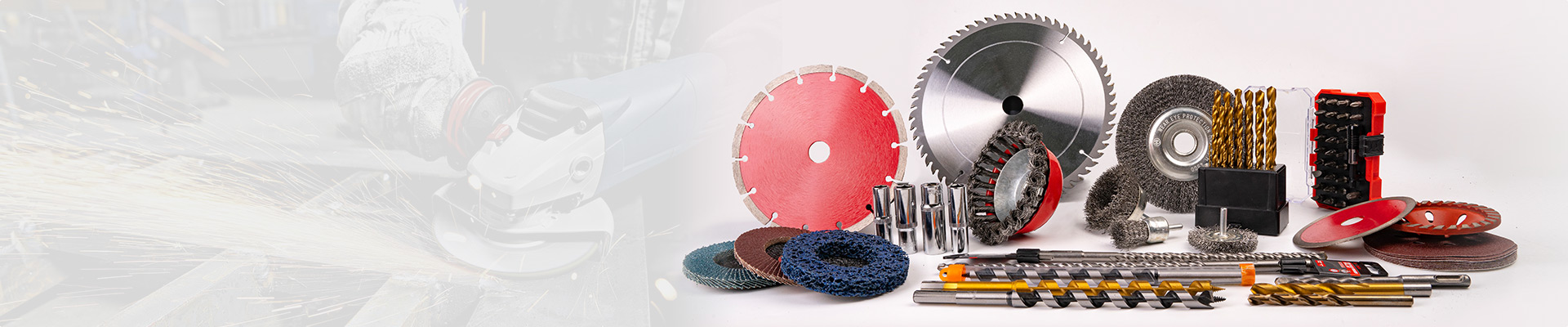
As the global power tool industry continues to evolve, accessories have become an increasingly critical segment of the value chain. While complete tools often attract the most attention, accessories—such as cutting discs, drill bits, saw blades, and abrasives—remain the most frequently replaced and repurchased components.
Entering 2026, the power tool accessories market is showing stable growth, driven by structural changes rather than short-term fluctuations. For importers, distributors, and wholesale buyers, understanding these shifts is essential to building a resilient and profitable product portfolio.
Global Market Overview: Steady Growth with Structural Transformation
The global demand for power tool accessories continues to expand at a moderate but consistent pace. Unlike complete tools, which are more sensitive to economic cycles, accessories benefit from ongoing replacement demand across construction, manufacturing, maintenance, and DIY applications.
Several structural trends define the 2026 landscape:
Emerging markets continue to invest in infrastructure and housing, driving sustained demand for basic and mid-range accessories.
Mature markets increasingly favor premium, longer-life accessories designed for professional use.
Industrial and trade users are prioritizing performance consistency and safety compliance over short-term cost savings.
This combination creates opportunities for suppliers who can offer both volume stability and differentiated product quality.
Key Growth Drivers Shaping the Market in 2026
1. Continued Expansion of Cordless Power Tools
The widespread adoption of cordless platforms has indirectly accelerated accessory consumption. Higher RPMs, compact designs, and mobile jobsite usage increase wear on consumable accessories, particularly cutting and grinding products.
As cordless tools become standard equipment for professionals, demand rises for accessories that can deliver:
◆ Higher heat resistance
◆ Better cutting efficiency
◆ Longer service life under intensive use
2. Construction, Renovation, and Maintenance Demand
While new construction drives volume, renovation and maintenance projects are proving to be more consistent long-term demand drivers. These applications rely heavily on accessories rather than new tool purchases.
Categories seeing stable demand include:
◆ Grinding and cutting discs for metal and masonry
◆ Drill bits for concrete, steel, and wood
◆ Circular saw blades for on-site cutting
This trend reinforces the importance of maintaining a broad and well-balanced accessory range.
3. Professional Users Driving Quality Expectations
Professional users are becoming less tolerant of performance inconsistency. Tool downtime caused by premature accessory failure directly impacts productivity and labor costs.
As a result, distributors and importers are increasingly sourcing:
◆ Accessories with tighter quality control
◆ Products tested for durability and safety
◆ Suppliers capable of delivering batch-to-batch consistency
This shift favors manufacturers with established production standards and scalable capacity.
Product-Level Trends: Accessories with Growing Demand
Cutting and Grinding Accessories
Cutting wheels, grinding discs, and diamond products remain among the fastest-moving accessory categories. In 2026, buyers are paying closer attention to bond quality, material composition, and application-specific performance rather than generic specifications.
Products designed for:
◆ Metal fabrication
◆ Stone and concrete cutting
◆ Multi-purpose jobsite use
continue to show strong turnover across global markets.
Drill Bits and Hole-Making Accessories
Drill bits remain a core category with stable year-round demand. Growth is especially visible in:
◆ Masonry and concrete drill bits
◆ HSS and alloy steel drill bits for metalworking
◆ Multi-material solutions for mixed-use environments
Buyers increasingly prefer suppliers who can offer complete drill bit assortments rather than single SKUs.
Saw Blades and Precision Cutting Tools
Circular saw blades and specialized cutting accessories are gaining traction as users demand cleaner cuts and longer blade life. This is particularly relevant in professional woodworking, aluminum processing, and construction finishing work.
Consistency in tooth geometry and heat treatment has become a key purchasing criterion.
Abrasives and Surface Finishing Products
Abrasives continue to be high-rotation items, especially in industrial and maintenance settings.
Demand is shifting toward:
◆ More durable abrasive materials
◆ Products that reduce rework and material waste
◆ Stable supply for long-term contracts
What Buyers and Importers Should Focus on in 2026
For wholesalers, importers, and brand owners, 2026 is less about chasing novelty and more about optimizing supply decisions.
Key considerations include:
◆ Product reliability: Fewer complaints, fewer returns, stronger customer retention
◆ Consistent production quality: Essential for repeat orders and private labeling
◆ OEM and branding flexibility: Increasingly important for competitive differentiation
◆ Compliance and safety standards: Necessary for long-term market access
Rather than expanding SKU counts indiscriminately, many successful buyers are focusing on refining their core accessory categories.
Opportunities for Accessory Brands and Suppliers
The 2026 market environment favors suppliers who understand both product performance and commercial realities. Accessory manufacturers with integrated production, broad category coverage, and export experience are better positioned to support long-term partnerships.
For buyers, working with suppliers that can provide:
◆ Multiple accessory categories under one sourcing structure
◆ Stable lead times for repeat orders
◆ Scalable solutions from standard products to customized lines
will be increasingly important as competition intensifies.
Building a Smarter Accessories Strategy for 2026
Power tool accessories will remain a cornerstone of the global tool industry in 2026—not because of rapid disruption, but because of their essential role in daily professional and industrial work.
For distributors, importers, and brands, success will depend on selecting the right accessory mix, partnering with capable suppliers, and aligning product offerings with real-world usage demands.
Those who invest in quality, consistency, and long-term sourcing strategies will be best positioned to capture sustainable growth in the year ahead.


