


Why Supplier Selection Matters More Than Ever
In 2026, sourcing power tool accessories is no longer just about finding the lowest price—it is about finding the right long-term partner. As global competition intensifies and end users demand higher performance, the cost of unreliable supply has increased significantly.
For importers, distributors, and brand owners, choosing the right supplier directly affects product quality, customer satisfaction, and long-term profitability. A single inconsistency in quality or delivery can lead to lost clients and damaged brand reputation.
1. Consistent Product Quality Over Low Pricing
While pricing remains an important factor, experienced buyers understand that consistency is what drives repeat business.
● Reliable suppliers should be able to deliver:
● Stable performance across batches
● Uniform specifications and tolerances
● Predictable product lifespan
This is especially critical for high-consumption categories such as cutting discs, grinding wheels, and drill bits, where performance variation is immediately noticeable in real-world applications.
Choosing slightly higher-cost products with stable quality often results in lower overall costs by reducing complaints, returns, and downtime.
2. Manufacturing Capability and Production Control
A supplier’s manufacturing capability is one of the most important indicators of reliability.
Professional buyers should evaluate whether the supplier has:
In-house production or outsourced manufacturing
Control over raw materials and key components
Standardized production processes
Dedicated quality inspection systems
Suppliers with integrated production lines are typically better positioned to ensure consistent quality and scalable output, especially for large or repeat orders.
3. Product Range and One-Stop Sourcing Advantage
In 2026, many importers are shifting toward consolidated sourcing strategies.
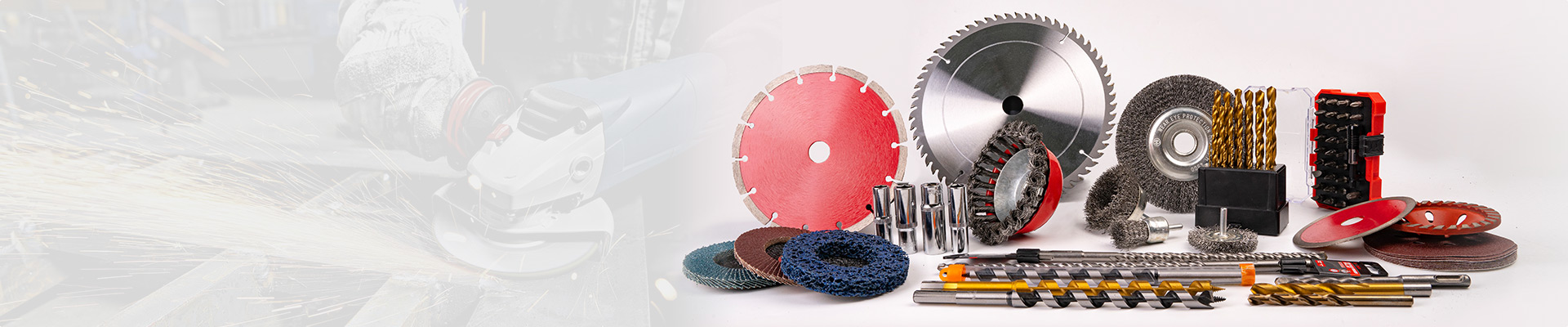
Working with a supplier that offers multiple accessory categories—such as cutting and grinding products, drill bits, saw blades, and abrasives—provides several advantages:
● Reduced supplier management complexity
● More efficient logistics and shipping
● Better pricing through combined orders
● Easier product line expansion
Instead of sourcing each category separately, buyers increasingly prefer partners who can support a structured and scalable product portfolio.
For example, distributors already working with specialized
cutting and grinding accessories often expand into complementary categories to better serve their markets.
4. OEM and Private Label Flexibility
Brand owners and distributors are placing greater emphasis on differentiation. As a result, OEM and private label capabilities have become essential.
A reliable supplier should be able to support:
● Custom branding and packaging
● Flexible MOQ options
● Product customization based on market needs
● Long-term brand development cooperation
Suppliers that understand export markets and branding requirements can provide significantly more value than those offering only standard products.
5. Communication and After-Sales Reliability
Beyond product quality, communication plays a critical role in long-term cooperation.
Key indicators of a reliable supplier include:
● Fast and clear response times
● Transparent handling of issues
● Willingness to provide solutions, not excuses
● Consistent support across multiple orders
In international trade, delays or miscommunication can quickly escalate into costly problems. Strong communication reduces uncertainty and builds trust.
6. Compliance and Market Requirements
Different markets have different safety and compliance requirements, especially for accessories used in high-speed or heavy-duty applications.
Buyers should ensure that suppliers can meet:
Relevant safety standards
Proper labeling and specifications
Market-specific compliance requirements
This is particularly important when supplying to regulated regions where non-compliant products can lead to import restrictions or liability issues.
7. Long-Term Partnership Potential
In 2026, successful sourcing strategies are built on long-term partnerships rather than transactional purchases.
Reliable suppliers should demonstrate:
Stability in production capacity
Ability to grow with your business
Commitment to continuous product improvement
Instead of switching suppliers frequently, many distributors are investing in fewer but more capable partners who can support sustainable growth.
Choosing Partners, Not Just Suppliers
Selecting a power tool accessory supplier is no longer just a procurement decision—it is a strategic business decision.
Buyers who prioritize quality consistency, production capability, and structured product support will be better positioned to compete in increasingly demanding markets.
At the same time, understanding broader industry direction is equally important. For a deeper look at how the market is evolving, you can refer to our analysis of power tool accessories market trends in 2026.
Willingness to provide solutions, not excuses


