


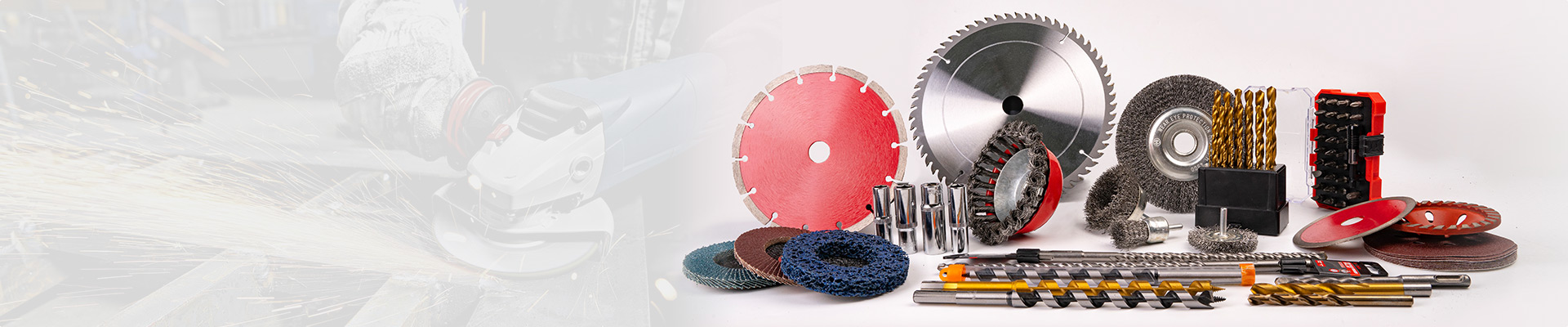
The correct cut-off wheel is selected by matching its diameter and maximum RPM to the tool, choosing Type 1 or Type 27 for the cut geometry, selecting the abrasive grain for the metal, and using the thinnest suitable wheel for the required precision and service life. I also check the arbor, guard, workpiece support, and finish requirement before cutting.
Whether I am selecting cut-off wheels for metal for a home workshop, fabrication shop, or purchasing program, I use the same sequence: identify the tool, identify the metal, measure the material thickness, choose wheel geometry, then verify the safety markings. This approach reduces slow cutting, excessive heat, premature wear, and breakage.
What Are Cut-Off Wheels for Metal?
A metal cut-off wheel is a thin bonded abrasive disc designed to remove material through a narrow cutting kerf. Unlike a grinding wheel, it is intended for edge-on cutting rather than surface grinding, beveling, or heavy side pressure. The wheel contains abrasive grains held together by a resin bond and reinforced with fiberglass layers.
As the disc rotates, the abrasive grains fracture small sections of the workpiece and gradually wear away. Aluminum oxide is commonly used for carbon steel, while stainless-steel applications often use formulations designed to reduce contamination and loading. For aluminum, I look for wheels specifically labeled for nonferrous metals because ordinary steel wheels can load quickly.
A cut-off wheel is different from a flap disc because a flap disc removes material through overlapping abrasive flaps and is intended for surface blending, deburring, and finishing. A cut-off wheel produces a narrow separation cut, while a flap disc produces controlled surface abrasion.
How to Choose Cut-Off Wheels for Metal by Size, Thickness, and Application
I choose a wheel by applying this formula:
Tool compatibility + metal type + material thickness + cut geometry + finish requirement = suitable cut-off wheel.
The wheel must fit the machine mechanically and operate within the machine’s rated speed. The abrasive and thickness must match the metal and the desired cut, while the wheel type must match whether I am using an angle grinder, chop saw, or another cutting tool.
1. Match Wheel Diameter, Arbor, RPM, and Guard
The most important starting point is the cut-off wheel size for angle grinders or saws. Common angle-grinder diameters include 4, 4.5, 5, 6, and 7 inches, while chop saws commonly use 12- or 14-inch wheels. The diameter must match the tool’s guard and spindle design; I never install a larger wheel simply because it appears to offer greater cutting depth.
The arbor hole must also match the tool. A wheel designed for a 7/8-inch arbor should not be forced onto a 5/8-inch spindle, and a loose fit can create dangerous runout. The wheel should seat flat against the flange, with the correct flange arrangement for that machine.
Maximum RPM is equally important. I compare the wheel’s printed maximum RPM with the tool’s no-load RPM and use the lower rating. For example, if a 4.5-inch wheel is marked for 13,300 RPM and the grinder operates at 11,000 RPM, the wheel is within its stated speed rating; if the tool exceeds the wheel rating, I do not use it.
Guard compatibility cannot be separated from diameter. The guard must cover the required portion of the wheel and remain installed during operation. A wheel that fits the spindle but cannot be used with the correct guard is not a suitable wheel for that machine.
What Size Cut-Off Wheel Do I Need for Metal?
For light sheet metal, brackets, tubing, and small repair work, a 4- or 4.5-inch wheel is often practical when the angle grinder is designed for that diameter. For larger angle grinders and deeper profiles, a 5-, 6-, or 7-inch wheel can provide greater cutting depth, but it also adds weight and requires a compatible guard.
For stationary chop saws, the wheel size should match the saw’s specification, commonly 12 or 14 inches. A 14-inch wheel may cut larger tubing and bar stock than a 12-inch wheel, but only when the saw, guard, arbor, and RPM rating are designed for it.
| Application | Typical wheel diameter | Selection priority |
|---|---|---|
| Sheet metal and small brackets | 4–4.5 inches | Control and narrow kerf |
| Steel tubing and angle iron | 4.5–7 inches | Cutting depth and stability |
| Large structural sections | 12–14 inches | Saw compatibility and wheel capacity |
| Stainless trim and thin profiles | 4–5 inches | Low heat and reduced burrs |
| Repetitive shop cutting | Tool-specific | Life per cut and consistent output |
2. Select Thickness for Precision, Heat, Burrs, and Service Life
The cut-off wheel thickness for steel affects cutting speed, control, kerf width, heat generation, burr formation, and resistance to side movement. Thin wheels commonly range from approximately 0.040 to 0.045 inches, while general-purpose wheels may be around 0.060 to 0.080 inches. Larger chop-saw wheels are often thicker because they must remain stable over a larger diameter.
A thin wheel removes less material, so it usually cuts faster and creates a smaller kerf. That can reduce heat discoloration and leave less burr on thin sheet metal, stainless tubing, and small profiles. The trade-off is that thin discs are less tolerant of twisting, side-loading, and misalignment.
A thicker wheel generally provides more lateral stiffness and may last longer when cutting heavy steel sections. It can be useful for repeated cuts through thick bar, angle iron, and structural tubing, but it removes more material and may require greater feed pressure. If the cut becomes slow or the wheel begins to bind, increasing pressure is usually the wrong response.
What Thickness Cutting Wheel Should I Use?
For thin sheet metal and light tubing, I typically begin with a thin wheel around 0.040–0.045 inches when the operator can maintain a straight cut. For general carbon-steel fabrication, a 0.060-inch wheel often provides a balance between control and durability. For thick steel, heavy profiles, or stationary chop-saw work, a thicker wheel may provide better stability.
The material should not be the only consideration. If the cut must be clean and precise, I choose the thinnest wheel that the tool, operator, and workpiece setup can support. If the workpiece is difficult to secure or the cut involves a long engagement length, I may choose a thicker wheel to reduce flexing.
3. Choose Abrasive Grain and Wheel Type by Metal
For carbon steel, aluminum oxide cut-off wheels are widely used because the abrasive is suited to ferrous metal and is available in many wheel sizes and thicknesses. For stainless steel, I select a wheel labeled for stainless or INOX service, particularly when the finished part must avoid iron contamination. These wheels are often formulated with low-iron materials and are intended to reduce discoloration and contamination.
For aluminum, I use a wheel designed for aluminum or other nonferrous metals. Aluminum can clog or load a wheel when the abrasive and bond are not suitable, especially when excessive pressure generates heat. If the wheel begins rubbing instead of cutting, I stop and inspect the wheel rather than continuing with more force.
Abrasive selection should also reflect the application. A general-purpose wheel may be suitable for occasional carbon-steel repairs, while a fabrication shop performing hundreds of cuts should compare cut rate, wheel life, burr removal, and operator time. Power Tool Accessorie presents cut-off wheels among its cutting-accessory products, including reinforced metal wheels and larger industrial metal cutting discs for different tool categories.
4. Identify Type 1 or Type 27 Geometry
A Type 1, also called a flat cut-off wheel, has a flat profile and is commonly used for straight cutting on angle grinders and chop saws. It allows the wheel to enter a narrow kerf and is the usual choice when the goal is separation rather than surface work.
A Type 27 wheel has a depressed center. This design can provide flange clearance and may be used with certain tools and cutting applications, but I follow the wheel and machine manufacturer’s instructions because the correct guard and flange arrangement can differ.
Neither profile should be treated as a grinding wheel. Cutting wheels are engineered for edge loading, while grinding wheels are built for controlled surface contact. Using a cut-off wheel to grind, bevel, or remove welds can place side pressure on the disc and increase the risk of fracture.
Metal Cut-Off Wheel Selection Matrix
The following matrix gives me a practical starting point before I inspect the tool label and wheel specifications.
| Material or profile | Typical diameter | Starting thickness | Abrasive direction | Main concern |
|---|---|---|---|---|
| 0.8–2 mm sheet steel | 4–4.5 inches | 0.040–0.045 inches | Aluminum oxide | Heat and distortion |
| 2–6 mm carbon-steel tube | 4.5–5 inches | 0.045–0.060 inches | Aluminum oxide | Burr control |
| 6–12 mm steel bar | 5–7 inches | 0.060–0.080 inches | Aluminum oxide | Wheel stability |
| Stainless-steel tube | 4–5 inches | 0.040–0.060 inches | Stainless-rated abrasive | Contamination and discoloration |
| Aluminum angle or tube | 4–5 inches | Application-specific | Nonferrous-rated wheel | Wheel loading |
| Heavy structural steel | 12–14 inches | Saw-rated thickness | Industrial metal wheel | Feed control and life |
These dimensions are selection starting points, not universal specifications. I verify the wheel label, machine manual, arbor, guard, and maximum RPM before use. The best cut-off wheels for stainless steel, for example, are not automatically the best choice for aluminum or carbon steel.
A Practical Cost-per-Cut Comparison
Purchase price alone does not identify the economical wheel. I calculate cost per cut with this simple equation:
Cost per cut = wheel price ÷ usable cuts per wheel + labor and rework cost.
Suppose a $2 wheel makes 20 acceptable cuts, giving a wheel-only cost of $0.10 per cut. A $3 wheel that makes 40 cuts costs $0.075 per cut before labor, even though its purchase price is higher. If the second wheel also cuts 15 seconds faster per cut and produces fewer burrs, the total operating cost may be lower.
For small businesses, I record wheel diameter, thickness, metal type, number of cuts, cut time, visible burrs, and rejected pieces. For a fabrication shop, I also record operator changes, downtime, dressing or deburring time, and heat-related rework. This creates a real comparison between wheels instead of relying on packaging claims.
A supplier such as Power Tool Accessorie can also be evaluated by more than disc price. I would compare available diameters, custom abrasive options, packaging, OEM labeling, sample testing, minimum order quantity, and production consistency. The company identifies cut-off wheels, industrial metal cutting discs, customization, and ISO 9001-based quality systems among its product and manufacturing capabilities.
Safety Checks Before Cutting
I complete these checks every time I install a wheel:
Inspect the wheel: Reject discs with cracks, chips, warping, water damage, or damaged reinforcement.
Check the expiration or use-by marking: Resin-bonded wheels can deteriorate during storage, particularly in damp conditions.
Compare RPM ratings: The wheel’s maximum RPM must meet or exceed the tool’s operating speed.
Confirm the guard: Use the correct guard and keep it positioned between the wheel and the operator.
Check the arbor and flanges: The wheel must sit flat without forcing, bending, or excessive clearance.
Wear PPE: Use eye protection, a face shield, hearing protection, gloves suited to the task, long sleeves, and protective footwear.
Secure the workpiece: Support both sides of the cut so the kerf does not close and pinch the wheel.
I keep the wheel perpendicular to the workpiece and allow the abrasive to cut without twisting. I do not use the side of a cut-off wheel for grinding, and I avoid forcing the disc through the material. Sparks should be directed away from flammable materials, people, hoses, batteries, and exposed wiring.
Troubleshooting Common Cutting Problems
Slow cutting can result from a dull or loaded wheel, excessive wheel thickness, low tool speed, or insufficient abrasive exposure. I first check whether the wheel is suitable for the metal and whether the tool is operating at its rated speed. Pressing harder can increase heat and reduce wheel life.
Wheel loading is common when the abrasive is not suited to aluminum or when the operator uses too much pressure. I switch to a nonferrous-rated wheel, reduce feed pressure, and allow the disc to cut rather than rub. A loaded wheel should not be restored by striking it or using a damaged dressing method.
Excessive vibration or uneven cuts usually points to poor workpiece support, an incorrect flange, a bent wheel, or an arbor mismatch. I stop the tool, remove the wheel, and inspect the mounting surfaces. If the wheel is sound, I improve the support and mark the cut line more clearly.
Breakage can result from side-loading, pinching, dropping the wheel, exceeding the RPM rating, or using the wrong guard. I discard any wheel involved in a severe impact or suspected overload. I never continue operating a disc after it has produced unusual noise, visible damage, or repeated snagging.
Heat discoloration and heavy burrs indicate that the wheel may be too thick, too slow, too dull, or poorly matched to the metal. I test a thinner wheel for thin profiles, reduce pressure, and support the workpiece closer to the cut. Stainless steel may require a dedicated stainless-rated disc to limit discoloration and contamination.
How I Choose the Right Wheel for Common Jobs
For a small sheet-metal repair using a 4.5-inch angle grinder, I choose a thin, reinforced Type 1 wheel that matches the grinder’s arbor and RPM. I support the sheet close to the cut and use short, controlled passes to limit distortion.
For 6–10 mm carbon-steel angle iron, I generally choose a 4.5- or 5-inch wheel around 0.060 inches thick when the tool is rated for it. The workpiece must be clamped so the cut does not close around the disc, especially near the end of the cut.
For stainless tubing, I use a stainless-rated wheel with a thin profile when precision and low discoloration matter. I avoid using a disc that has previously cut carbon steel if contamination is a concern.
For aluminum, I use a wheel marked for nonferrous metal and monitor loading closely. If the workpiece is thick or the wheel repeatedly clogs, a different cutting method may provide better control than continuing with an unsuitable abrasive disc.
Conclusion
How to Choose Cut-Off Wheels for Metal: Size, Thickness and Application begins with tool compatibility, not brand preference. I match the wheel diameter, arbor, guard, and maximum RPM to the angle grinder or saw, then choose thickness according to cut precision, heat, burrs, material thickness, and expected service life.
For carbon steel, aluminum oxide is a practical starting point; for stainless steel, I select a stainless-rated wheel; and for aluminum, I use a nonferrous-metal formulation. I choose Type 1 for standard straight cutting unless the machine and application specifically require another profile, and I never use a cut-off wheel for side grinding.
Before purchasing, I record the metal, profile, thickness, tool RPM, required cut depth, finish requirement, and estimated number of cuts. After testing, I compare cost per acceptable cut, cut time, burr removal, wheel changes, and rework instead of comparing purchase price alone. This process gives me a repeatable metal cutting wheel selection guide for individual repairs, small businesses, and production fabrication shops.


