


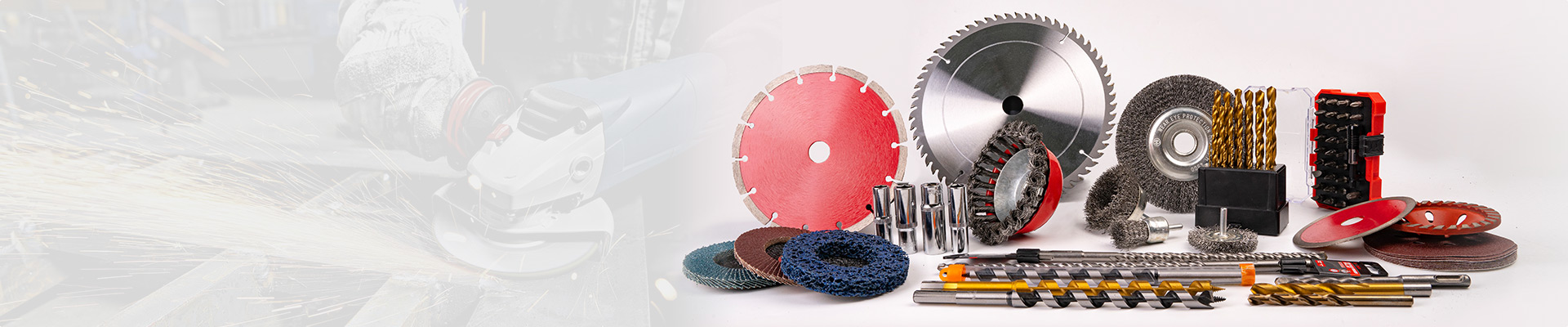
In 2026, cutting and grinding accessories are no longer viewed as low-cost consumables—they are productivity tools. For professional users in metal fabrication, construction, and industrial maintenance, accessory performance directly impacts jobsite efficiency, safety, and overall operating costs.
As competition increases and labor costs rise globally, professionals are demanding more from every cutting disc and grinding wheel they use. For importers and distributors, understanding these expectations is critical to building a competitive product offering.
1. Longer Service Life Under High-Speed Conditions
With the widespread use of high-performance angle grinders—especially cordless models with higher RPM stability—accessories are exposed to greater mechanical stress and heat.
Professional users now expect:
● Improved bond strength
● Reduced disc breakage
● Stable performance throughout the disc’s lifespan
● Less frequent replacement
Products that fail prematurely are quickly rejected by contractors who calculate cost per cut, not cost per unit.
This is why high-quality cutting and grinding accessories are increasingly specified for demanding applications rather than generic low-grade alternatives.
2. Application-Specific Solutions Instead of “Universal” Products
In the past, multi-purpose cutting discs dominated many markets. In 2026, professional buyers are moving toward application-focused products:
● Metal cutting discs optimized for stainless steel
● Thin cutting wheels for faster, cleaner cuts
● Diamond blades engineered for concrete and stone
● Grinding wheels designed for heavy weld removal
This shift creates opportunities for suppliers who offer a structured product range rather than a limited, undifferentiated selection.
3. Higher Safety and Compliance Standards
Safety is becoming a non-negotiable requirement. Distributors supplying to regulated markets must ensure their accessories meet relevant safety and testing standards.
Professional users expect:
● Stable rotation without vibration
● Controlled wear patterns
● Clear labeling of maximum RPM
● Reliable structural integrity
Low-quality discs that shatter under pressure can damage both brand reputation and distributor credibility.
4. Performance Consistency Across Batches
One of the most overlooked factors in wholesale sourcing is batch-to-batch consistency. Professional contractors expect the same cutting behavior from every disc in a box—and from every shipment they reorder.
For importers and brand owners, this means prioritizing suppliers with:
● Controlled raw material sourcing
● Standardized production processes
● Stable quality inspection systems
Consistency often matters more than minor price differences in long-term partnerships.
5. Efficiency and Labor Cost Considerations
In many markets, labor cost now exceeds material cost. This changes purchasing behavior.
Professional users increasingly evaluate:
● Cutting speed
● Smoothness of operation
● Reduced rework
● Lower downtime
Accessories that improve efficiency—even if slightly more expensive—are often preferred when total job cost is considered.
6. Demand for Structured Product Lines
Instead of buying random SKUs, distributors are organizing structured product lines that cover:
● Thin cutting discs (1.0–1.2mm)
● Standard thickness discs
● Heavy-duty grinding wheels
● Diamond cutting solutions
This approach allows wholesalers to serve both price-sensitive buyers and premium professional segments.
Suppliers capable of offering a comprehensive cutting and grinding portfolio under one sourcing structure provide clear logistical advantages for importers managing multiple categories.
What This Means for Buyers and Distributors in 2026
The 2026 market favors structured sourcing decisions rather than opportunistic buying. Importers who align their cutting and grinding range with real professional expectations will:
● Reduce customer complaints
● Increase repeat orders
● Strengthen brand positioning
● Improve overall margin stability
● Cutting and grinding accessories may remain consumables, but they are no longer low-involvement purchasing decisions.
Performance, Safety, and Consistency Define the Future
Professional users in 2026 expect more durability, more precision, and more reliability from every cutting disc and grinding wheel they use.
For distributors and brand owners, success lies in selecting suppliers who understand not only manufacturing, but also the practical realities of jobsite performance.
As demand continues to evolve, those who prioritize structured product development and long-term quality control will be best positioned to grow in the competitive cutting and grinding accessories market.


